AI Resources for Engineering Teams: From Code to Deployment
By Team Lean Agile Intelligence
AI didn’t arrive as a formal rollout for most engineering teams. It showed up in pull requests, IDEs, debugging sessions, and test generation.
For many engineers, AI is already part of the workflow. But like most early adoption phases, the experience is uneven.
Some engineers are using it to accelerate development, improve code quality, and reduce repetitive work. While others are unsure when to trust it, using it inconsistently, or avoiding it altogether. However across teams, there’s often no shared guidance, no clear standards, and no visibility into impact.
So the question isn’t:
“Can AI help engineering teams?”
It’s:
“How do we use AI in a way that improves delivery, quality, and consistency?”

Curated AI Resources for Engineering Teams
The resources below focus on how AI supports real engineering work—from development through deployment.
AI-Assisted Coding
Enhances how engineers write code by supporting faster generation, iteration, and refinement—while keeping human judgment central to quality and design decisions.
-
How AI Code Generation Works — GitHub: Explains how AI coding assistants work under the hood so teams can use them more effectively.
-
Best Practices for Coding with AI — Codacy: Practical guidance for using AI in real development workflows without compromising quality.
-
AI Code Guide — Automata: An open-source handbook for integrating AI into day-to-day engineering practices.
-
ChatGPT for Engineering Teams — OpenAI: Real-world examples of how engineering teams apply AI across development tasks.
AI-Assisted Debugging
Helps teams diagnose issues more quickly by surfacing potential causes, suggesting fixes, and improving how problems are investigated and understood.
-
The 3 Levels of Debugging with AI — Neon: Breaks down how teams can evolve from simple AI suggestions to deeper problem analysis.
-
Prompts for Code Review and Debugging — TechiesDiary: A collection of practical prompts for identifying issues and improving code quality.
-
Debugging with AI: Writing Better Prompts — MyMagicPrompt: Focuses on how better prompting leads to faster, clearer debugging outcomes.
AI for Unit Testing & Test Case Creation
Improves test coverage and consistency by supporting the creation of unit tests and test cases, reducing manual effort while increasing confidence in code quality.
-
AI vs Manual Unit Testing — Zencoder: Compares AI-generated and manual tests, helping teams understand where each approach fits.
-
AI for Unit Testing — Aqua Cloud: A comprehensive guide to improving test coverage and reliability with AI.
-
Create Unit Tests Using AI — Codecademy: Walks through practical examples of generating unit tests with AI.
-
Generate Unit Tests with Prompts — GitHub Copilot: Provides ready-to-use prompt templates for streamlining test creation.
-
AI Test Case Generation — TestGrid: Explains how AI can generate test cases and improve QA efficiency.
-
AI-Generated Test Cases from User Stories — ThoughtWorks: Research-backed insights into generating test cases directly from product requirements.
AI for Test Data & Test Execution
Enables more effective testing by generating realistic test data and supporting automated execution, helping teams validate systems under a wider range of conditions.
-
Generate Test Data with LLMs — CircleCI: Shows how AI can create realistic, diverse datasets for more effective testing.
-
Synthetic Test Data Guide — Mostly AI: Covers scalable and privacy-safe approaches to generating test data.
-
AI in QA Testing — GeekyAnts: A hands-on guide to applying AI across QA workflows.
-
Test Automation with ChatGPT — BrowserStack: Demonstrates how AI enhances automation from scripting to debugging.
-
Prompt Engineering for Testing — Aqua Cloud: Shows how better prompts improve testing accuracy and efficiency.
AI for Documentation
Supports the creation and maintenance of clear, up-to-date documentation, making it easier for teams to share knowledge and reduce gaps over time.
-
AI Code Documentation — IBM: Explains how AI can automate and improve code documentation workflows.
-
API Documentation Generation Guide — DocuWriter: Covers tools and best practices for generating and maintaining API docs.
-
AI Documentation Workflow — GitBook: Shows how AI fits into modern documentation processes.
-
AI for Technical Writers — MadCap Software: Provides strategies for improving structure, clarity, and consistency in documentation.
-
AI Documentation Automation — Graphite: Focuses on automating code comments and keeping documentation up to date.
AI in Development Workflows
Focuses on embedding AI across the software lifecycle—from coding to deployment—so it becomes a natural part of how engineering work gets done.
-
AI Integration into Workflows — Zapier: A practical guide to embedding AI into existing engineering tools and processes.
-
AI Workflow Automation — Atlassian: Explains how AI improves collaboration and delivery across teams.
-
AI in the Workplace — McKinsey: Explores how organizations scale AI across engineering workflows.
-
AI Infrastructure Guide — Mirantis: Covers the foundational systems needed to support AI at scale.
-
Scaling AI Infrastructure — Nasscom: Focuses on scaling AI systems to support real-time and production workloads.
From Code to Deployment: Connecting the Workflow
Engineering work is a system. Changes in one area ripple through everything else.
AI now touches every stage of that system, from code generation and debugging to testing, documentation, and integration. Each of these moments influences the next. Code generation shapes quality. Debugging impacts stability. Testing determines reliability. Documentation supports maintainability. Integration ultimately drives adoption.
When these pieces are aligned, AI can accelerate delivery, improve consistency, and reduce friction across the workflow.
But when they’re not, it can introduce inconsistency, increase risk, and create more work over time.
👉 The goal isn’t isolated improvements.
It’s a connected, end-to-end engineering workflow supported by AI.
Where to Start Turning Insight Into Action
As we explored these resources while building AI assessments, one thing became clear:
Engineering teams don’t need more tools. They need clarity.
A simple place to start is by watching the recording of our webinar here:
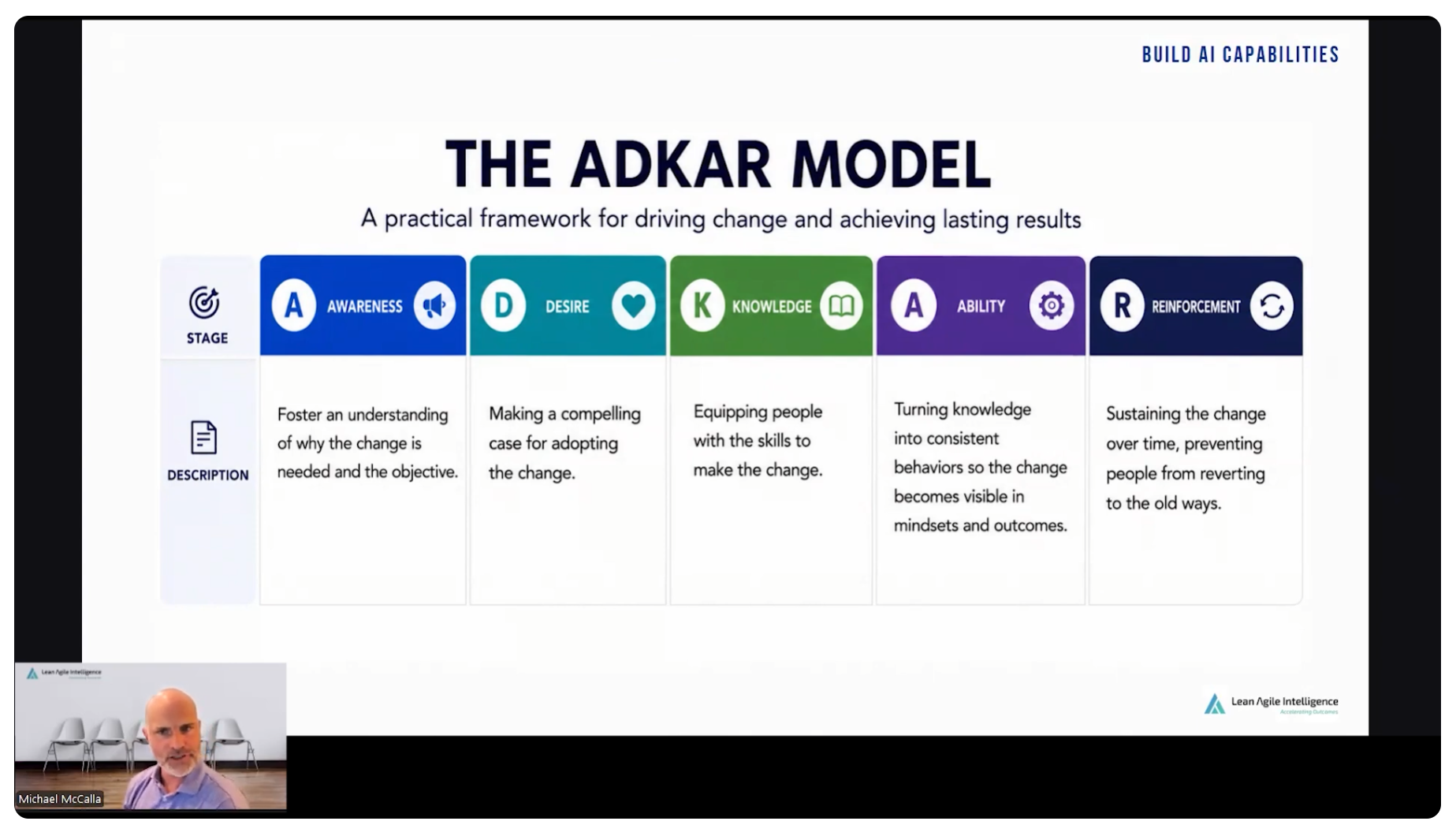
Build AI Capabilities with Intent, Focus, and Speed
In this webinar, we walked through how leading organizations were turning AI from experimentation into real, measurable productivity.
If you’re already ready to go deeper, we’ve also been working on something to help with exactly this challenge.
Our AI Assessments Beta Program is designed to help organizations understand:
-
where they stand today
-
where gaps exist
-
and where to focus next
Because ultimately, success with AI isn’t about knowing more. It’s about using it effectively to drive meaningful outcomes.
👉 Explore the AI Assessments Beta Program
What’s Next
As AI continues to evolve, the challenge for engineering teams isn’t access to tools, it’s knowing how to use them effectively within real development workflows.
That’s why we’ve started curating AI resources for engineers you can rely on, focused on how AI supports day-to-day development work.
You can also explore more of those resources here in this post:
- AI Resources You Can Trust
- AI Resources for Leaders
- AI Resources for Product Managers
- AI Resources for Business Agility Coaches